


Hire and pay employees
Hire and pay employees in India
India’s 900-million-strong working-age population, deep technology talent pool, and cost advantages of 40–60% vs. Western markets make it the fastest-growing destination for global hiring. But India’s employment landscape is uniquely complex: 28 states each with distinct labour regulations, mandatory contributions to Provident Fund and Employee State Insurance, the newly implemented 2026 Labour Codes reshaping salary structures, and strict termination protections that prohibit at-will dismissal.
TopSource enables you to hire and pay employees in India without setting up a local entity. As your Employer of Record, we handle the full employment lifecycle compliant contracts, multi-state payroll, statutory benefits, tax filings, and employee lifecycle management so you can build your India team with total confidence and zero compliance risk.

Ultimate Employment Guide to Hirng in India







Calculate payroll costs in India
Discover the full costs associated with employing and paying team members in India
Employment Cost Calculator
*Indicative figures only and not definitive legal advice. Local regulations change frequently. Consult an expertIndia
| British Pound | India | |
|---|---|---|
| Base Salary (per month) | ||
| Employer Contributions | ||
| Total Cost (Annual) | ||
| Total Cost (Monthly) |
India Employment Law: Key Regulations for Employers

Working Hours

Termination & Severance

Paid Annual Leave

Minimum wage
Onboarding & Contracts
Indian Employment Contracts & Onboarding
Employment Contract Essentials
While oral agreements are technically valid in India, a written Employment Agreement is the industry standard for IP protection, clear compensation terms, and legal enforceability. Under the Shops and Establishments Acts (which vary by state), employers must provide written terms of employment covering role, compensation, notice period, and workplace policies.
Key Clauses Every India Contract Must Include:
- Job role, reporting structure, and place of work (critical for multi-state compliance)
- CTC (Cost to Company) structure: basic salary (minimum 50% of CTC under 2026 Labour Codes), HRA, special allowances, statutory bonuses, and variable pay
- Probation period: typically, 3-6 months (confirmation process must be documented)
- Notice period: 30-90 days, governed by seniority level and state-specific Shops & Establishments Acts
- Restrictive covenants: confidentiality and non-solicitation are enforceable; post-termination non-competes are generally unenforceable under Section 27 of the Indian Contract Act
- IP assignment clause: critical for technology companies — must explicitly assign all work product created during employment
The Onboarding Compliance Checklist
A structured onboarding process is legally required and practically essential. Missing any of these steps can delay payroll processing or trigger penalties:
- KYC & Tax Documents: PAN card, Aadhaar verification, Form 12BB (investment declaration for TDS), bank account details for salary disbursement
- Statutory Benefits Enrollment: EPF registration with UAN (Universal Account Number), ESIC for employees earning ≤₹21,000/month, Professional Tax registration (varies by state — mandatory in Maharashtra, Karnataka, West Bengal, and others)
- Gratuity Nomination: Form F under the Payment of Gratuity Act (eligibility after 5 years of service)
- Background Verification: education, employment history, criminal record, and address checks (standard in IT/ITES sector)
- Policy Acknowledgements: POSH (Prevention of Sexual Harassment) policy, company handbook, IT/data usage policy, DPDP Act 2023 consent form

Indian Work Visas and Employee Relocation
Immigration and Work Visas in India
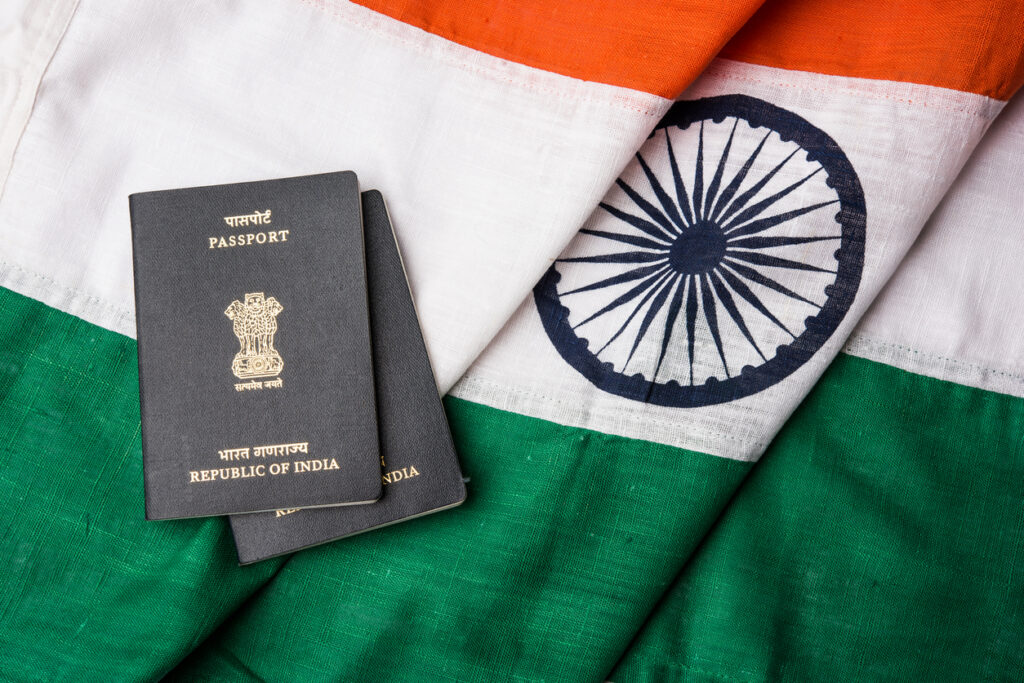
Employing or relocating staff to India requires compliance with the Ministry of Home Affairs regulations. Employers must ensure foreign nationals have the correct work authorization before starting employment.
Most skilled professionals require an Employment Visa (E-Visa). This typically carries a minimum salary threshold of USD 25,000 per annum. For short-term meetings or site visits, a Business Visa (B) may be used, though it does not allow for full-time employment or drawing a local salary.
Mandatory Registration & Compliance
Intra-company transfer (ICT) visas are available for multinational companies relocating employees to their Indian subsidiary or entity. Processing times typically range from 2-6 weeks depending on the embassy.
Foreign nationals staying in India for more than 180 days must register with the Foreigners Regional Registration Office (FRRO) within 14 days of arrival. Failure to register can lead to legal penalties and issues with exit permits.
India does not currently offer a digital nomad visa. Remote workers employed by foreign companies without a local entity or EOR should be aware that working from India on a tourist or business visa while drawing a salary may constitute a visa violation.
Processing times vary, making early planning essential. Employers are responsible for right-to-work checks and maintaining valid documentation. Many companies use an Employer of Record (EOR) or immigration support to ensure compliance and support a smooth relocation for employees moving to India.
*Don’t let visa delays stall your expansion. Secure compliant work authorization and onboard your Indian team in record time.
Minimum Wage & Payroll in India
Minimum Wage & Payroll in India
Minimum Wage & Pay Frequency
India does not have a single national minimum wage; instead, rates are determined by state, industry, and skill level.
-
Minimum Wage: For the Central Sphere (skilled workers), the rate is approximately ₹24,804 per month (~$275/month). However, state-specific rates can vary significantly, such as in Delhi or Maharashtra.
-
Pay Frequency: Salaries are mandatory to be paid monthly. Under the Code on Wages, payments must be made by the 7th of the following month for establishments with fewer than 1,000 employees (or the 10th for larger ones).
Sick Pay
Sick leave (often called Medical Leave) is primarily governed by state-specific Shops and Establishments Acts.
-
Entitlement: Employees typically receive 7 to 12 days of paid sick leave per year at 100% salary.
-
ESI Benefit: For employees earning below ₹21,000/month and registered under Employees’ State Insurance (ESI), the ESI Corporation provides sickness benefit (approx. 70% of wages) for up to 91 days in a year if the illness exceeds the employer-paid leave.
-
Documentation: A medical certificate is generally required for absences exceeding 2 or 3 consecutive days.
Maternity & Parental Leave
-
Maternity Leave: Under the Maternity Benefit Act, eligible women receive 26 weeks of fully paid leave for the first two children (up to 8 weeks can be taken before delivery). For the third child onwards, the entitlement is 12 weeks.
-
Adoption/Surrogacy: Mothers adopting a child under 3 months or “commissioning mothers” (surrogacy) are entitled to 12 weeks of paid leave.
-
Paternity Leave: There is currently no statutory mandate for paternity leave in the private sector in India, though it is standard practice for competitive employers to offer 5–15 days as a company benefit.
2026 Wage Code Impact
Under the Code on Wages 2019 (effective November 2025), the definition of ‘wages’ has been standardised across India. Basic salary must now constitute at least 50% of total CTC (Cost to Company). This directly impacts how minimum wage compliance is assessed and increases employer contributions to Provident Fund and gratuity. Companies that previously structured CTC with a low basic and high allowances will need to restructure compensation. TopSource handles this salary restructuring automatically for all EOR employees.
*India’s shifting labor codes and state-specific professional taxes make payroll accuracy a high-stakes task for any business.

Statutory Bonus & Benchmarking
Statutory Bonus (India’s 13th-Month Pay)
In India, the “13th-month pay” is legally mandated as an annual bonus. It is designed to ensure employees share in the organization’s profits or receive a minimum deferred wage.
Key Compliance Requirements
-
Mandatory Minimum: Employers must pay a minimum bonus of 8.33% of the annual salary (effectively one month’s “wage” as defined by the Act) even if the establishment suffers a loss.
-
Maximum Cap: The bonus can go up to 20% of the annual salary, depending on the “allocable surplus” or profits of the company.
-
Eligibility: Applies to employees earning up to ₹21,000 per month who have worked at least 30 days in the financial year. For those earning above this, the bonus is often paid as a discretionary “ex-gratia” to maintain parity. Under the 2026 Labour Codes, the wage ceiling for bonus eligibility may be revised upward as state rules are finalised – employers should monitor notifications.
-
Payment Timeline: Must be paid within 8 months of the close of the financial year (typically by November 30th), though it is culturally common to disburse it during major festivals like Diwali.
Employer Responsibilities
-
Register for Social Security: Ensure the establishment is registered under the EPF and ESIC acts (mandatory for 10–20+ employees depending on the state).
-
Occupational Safety: Comply with the Employees’ Compensation Act, 1923, by providing compensation for workplace accidents, often managed through statutory insurance.
-
Works Committees: Establishments with 100+ employees may be required to constitute a Works Committee to promote industrial harmony and resolve internal grievances.
*While statutory bonuses are the legal floor, staying competitive in India’s talent market requires knowing exactly what your peers are offering.

India Payroll: Social Security, Taxes, and Employer Costs
The costs for Provident Fund (EPF) and State Insurance (ESI) in India are split between the employee and employer, supporting the nation’s comprehensive social security framework. However, Gratuity and EDLI premiums are fully employer-funded, with Gratuity being a statutory benefit paid for long-term service. These contributions form a key part of employer compliance in India and should be factored into total payroll costs when hiring in India.
India Statutory Contributions
| Component | Employee Share | Employer Share |
|---|---|---|
| Provident Fund (EPF) | 12% | 12%* |
| State Insurance (ESI) | 0.75% | 3.25% |
| Gratuity | Nil | ~4.81% |
| EDLI (Insurance) | Nil | 0.50% |
| Professional Tax | Up to ₹200/month** | Nil |
*Note on EPF: The employer’s 12% is further divided into the Employees’ Pension Scheme (EPS) at 8.33% (capped at ₹1,250) and the remaining 3.67% goes to the Provident Fund (EPF) account.
**Note on Professional Tax: Rates vary by state. Maharashtra caps at ₹2,500/year, Karnataka at ₹2,400/year. Some states like Rajasthan and Uttar Pradesh do not levy Professional Tax. While deducted from the employee’s salary, the employer is responsible for registration, deduction, and remittance to the state authority.
In India, Provident Fund (EPF) and State Insurance (ESI) costs are shared between the employer and employee to support the national social security framework. Conversely, Gratuity and EDLI premiums are entirely employer-funded, with Gratuity serving as a statutory benefit for long-term service. These contributions are vital for employer compliance and must be factored into the total cost of hiring in India.
Statutory Contribution Ceilings
-
Provident Fund (EPF/EPS): Capped at ₹15,000/month. Contributions are calculated on this limit unless the employer chooses to contribute on the full basic salary.
-
State Insurance (ESI): Capped at ₹21,000/month. Employees exceeding this gross wage are exempt from mandatory ESI.
Other Employer Levies
-
EPF Admin Charges: 0.50% of PF wages for fund management.
-
EDLI (Insurance): 0.50% employer contribution for life insurance coverage.
-
Labour Welfare Fund (LWF): Nominal, state-specific monthly or half-yearly levies.
-
Gratuity Provision: A statutory accrual (approx. 4.81% of basic) for staff with 5+ years of service.
2026 Labour Code Impact on Employer Costs
Under the Code on Wages 2019 (effective November 2025), basic salary must constitute at least 50% of total CTC. For employers who previously structured compensation with a low basic (e.g. 30–40% of CTC) and high allowances, this means EPF and gratuity contributions will increase as both are calculated on basic salary. The estimated cost increase is 5-15% of total employer cost depending on current salary structures. TopSource automatically restructures CTC breakdowns for EOR employees to ensure compliance while optimising take-home pay.
Public Holidays and Employment Regulations in India
Public holidays in India are a key element of the country’s employment laws and HR regulations. Unlike many nations with a standardized list of national holidays, India’s employment regulations combine both mandatory national observances and a diverse range of state-level festivals. As a result, the number and type of public holidays in India vary depending on the state where employees work—for example, Maharashtra or Tamil Nadu may have more recognized regional holidays than Delhi.
Under various laws like the National and Festival Holidays Act, employees are generally entitled to a paid day off on public holidays, with three holidays being compulsory nationwide: Republic Day (January 26), Independence Day (August 15), and Gandhi Jayanti (October 2). When business operations require work on these days, employers must provide substitute rest periods (compensatory offs) or pay double the regular wages to follow all employment law compliance requirements. HR professionals and employers hiring in India should track holiday entitlements by location, ensure that employment contracts reflect the correct state-specific Shops and Establishments Act rules, and plan workforce scheduling accordingly.
Properly managing public holidays and employment regulations in India is not only a matter of legal compliance but also an important part of maintaining employee satisfaction and ensuring fair, transparent workplace practices in a culturally diverse workforce.
| Date | Holiday | Type / Region |
|---|---|---|
| 26 Jan | Republic Day | National Holiday (Mandatory) |
| 4 Mar | Holi | Gazetted – Most States |
| 21 Mar | Id-ul-Fitr | Gazetted – Subject to Moon Sighting |
| 3 Apr | Good Friday | Gazetted – Most States |
| 14 Apr | Ambedkar Jayanti | Widely Observed State Holiday |
| 1 May | Maharashtra Day / May Day | Maharashtra, Karnataka, and others |
| 15 Aug | Independence Day | National Holiday (Mandatory) |
| 14 Sep | Ganesh Chaturthi | Maharashtra, Gujarat, Karnataka, etc. |
| 2 Oct | Gandhi Jayanti | National Holiday (Mandatory) |
| 20 Oct | Dussehra | Gazetted – All States |
| 8 Nov | Diwali (Deepavali) | Gazetted – All States |
| 25 Dec | Christmas Day | Gazetted – All States |
Learn about other markets
We help organizations with employ and pay teams in over 180 countries. Learn about other markets, their employment laws and common HR practices.


Frequently Asked Questions About Hiring in India
Yes. You can legally hire full-time employees in India without a local entity by using an Employer of Record (EOR) service. The EOR becomes the legal employer in India, handling employment contracts, payroll, statutory contributions (EPF, ESI, Professional Tax), and compliance with state-specific labour laws – while you manage the employee’s day-to-day work. TopSource operates its own entity in India, ensuring direct employment rather than subcontracting through third-party aggregators.
The total cost of hiring in India is typically 20–25% above the employee’s gross salary. This includes mandatory employer contributions: Provident Fund (12% of basic salary), Employee State Insurance (3.25% for employees earning up to ₹21,000/month), Professional Tax (₹200/month in most states), gratuity accrual (approximately 4.81% of basic salary after 5 years), and statutory bonus (8.33–20% of wages for eligible employees). Use TopSource’s employment cost calculator on this page for an instant country-specific estimate.
India mandates several statutory benefits that all employers must provide: Employee Provident Fund (EPF) — 12% employer and 12% employee contribution on basic salary; Employee State Insurance (ESI) – 3.25% employer and 0.75% employee for those earning ≤₹21,000/month; gratuity – payable after 5 years of continuous service at 15 days’ wages per year; 26 weeks of paid maternity leave for the first two children; and statutory bonus of 8.33-20% for employees earning up to ₹21,000/month.
India’s four new Labour Codes (effective November 2025, full state implementation expected April 2026) introduce significant changes for all employers. The most impactful change is the 50% basic salary rule – basic wages must now constitute at least 50% of total CTC, which increases employer PF and gratuity costs by approximately 5-15%. Other changes include: mandatory Full & Final settlement within 48 hours of separation, fixed-term employees receiving full statutory benefits from day one and expanded social security coverage for gig and platform workers.
Through an EOR like TopSource, onboarding typically takes 2-5 business days once the candidate accepts the offer. This includes drafting a compliant employment contract, PF/ESI registration, PAN and Aadhaar verification, bank account setup, and background checks. Setting up your own legal entity in India, by contrast, takes 4-6 months and costs ₹30-50 lakh ($5,000–$15,000) in legal, registration, and compliance setup fees.
CTC is the total annual cost an employer incurs for an employee in India, including salary and all statutory contributions. A typical CTC structure includes: basic salary (minimum 50% of CTC under 2026 rules), House Rent Allowance (40-50% of basic), special allowances, employer PF contribution (12% of basic), ESI (3.25% if applicable), gratuity provision (4.81%), and statutory bonus. The employee’s take-home pay after PF, ESI, Professional Tax, and income tax deductions is significantly lower than the CTC figure – typically 65-75% of CTC for mid-level roles.
Notice periods in India typically range from 30 to 90 days depending on seniority level and state-specific Shops & Establishments Act rules. India does not permit at-will termination — employers must follow documented performance improvement processes before terminating for cause. Severance pay (retrenchment compensation) is mandatory at 15 days’ average wages per completed year of service under the Industrial Disputes Act. Under the 2026 Labour Codes, companies with 300+ workers now require government approval for mass layoffs (raised from the previous threshold of 100).
Under the 2026 Labour Codes, Full and Final settlement is now mandatory within 48 hours of an employee’s last working day. F&F includes unpaid salary, earned leave encashment, pro-rata bonus, gratuity (if eligible), reimbursements, and deductions for notice period recovery or outstanding advances. Employers must also issue a relieving letter, experience certificate, and Form 16 (tax certificate). Failure to complete F&F within the mandated timeline can result in penalties and employee grievances escalated to labour courts.
India has 3 mandatory national holidays: Republic Day (January 26), Independence Day (August 15), and Gandhi Jayanti (October 2). Beyond these, the number and type of holidays vary significantly by state – employers must follow the holiday schedule prescribed by each state’s Shops & Establishments Act. Most companies observe 10-14 public holidays annually, combining national holidays with regionally important observances like Diwali, Holi, Eid, Christmas, and state-specific festivals. Employers hiring across multiple Indian states must maintain separate holiday calendars for each location.
In India, the classification depends on the degree of control, integration, and economic dependence. An employee works under the employer’s direction with set hours, uses company equipment, is integrated into the organisational hierarchy, and receives statutory benefits. A contractor works independently, controls their methods and schedule, and typically works for multiple clients. Indian courts and tax authorities have reclassified contractors as employees when the relationship exhibits employment characteristics, ordering backdated PF, ESI, and bonus payments going back 3–7 years. The penalty risk makes correct classification critical.
Employee State Insurance (ESI) is mandatory for employees earning up to ₹21,000 per month, providing medical, sickness, and maternity benefits. For employees above this threshold, there is no statutory requirement for private health insurance, but it has become a standard market practice and a critical component of competitive compensation packages. Most Indian employers offer Group Mediclaim policies covering the employee plus dependents (spouse, children, and sometimes parents) with sum insured typically ranging from ₹3–5 lakh.
Under the Maternity Benefit Act 1961 (amended 2017), women employees are entitled to 26 weeks of fully paid maternity leave for the first two children (up to 8 weeks can be taken before the expected delivery date). For the third child onwards, the entitlement is 12 weeks. Mothers adopting a child under 3 months receive 12 weeks of leave. Employers with 50+ employees must provide a creche facility. Importantly, employees cannot be terminated during pregnancy or maternity leave except with specific government permission. These protections apply regardless of whether the employer is an Indian entity or an EOR.
Most foreign professionals require an Employment Visa (E-Visa) with a minimum salary threshold of USD 25,000 per annum. Business Visas (B-Visa) are available for short-term meetings and site visits but do not permit full-time employment or drawing a local salary. Foreign nationals staying in India for more than 180 days must register with the Foreigners Regional Registration Office (FRRO) within 14 days of arrival. India does not currently have a digital nomad visa. Intra-company transfer visas exist for multinational companies relocating employees to their Indian entity.
Under the Payment of Bonus Act 1965, employers must pay a statutory bonus to employees earning up to ₹21,000 per month who have worked at least 30 days in the financial year. The minimum bonus is 8.33% of wages (effectively one month’s salary) even if the company makes a loss. The maximum is 20% of wages, based on the company’s “allocable surplus” or profits. Bonus is typically paid within 8 months of the financial year close (by November 30), though many companies disburse it during Diwali. For employees earning above the threshold, companies often pay an ex-gratia bonus to maintain parity.
TopSource operates its own legal entity in India with a dedicated in-country team of payroll, compliance, and HR specialists not a network of third-party partners. This means direct employment contracts, faster onboarding (2–5 days), and single-point accountability for multi-state compliance across all 28 states and 8 union territories. TopSource also provides an interactive employment cost calculator, salary benchmarking data, and quarterly compliance audits giving you proactive insight rather than reactive support. With 20+ years of India payroll experience and the Portico platform for real-time visibility, TopSource combines local expertise with global scale.