Payroll Services in Guam
Fully managed payroll in Guam: Guam income tax under the mirror code, Social Security and Medicare to the 2026 wage base, wages paid within the seven-day deadline and W-2GU forms at year end, with a named specialist a phone call away.

TopSource rated 5/5 by our customers

What payroll in Guam actually involves
Payroll in Guam looks like US payroll with three differences: income tax goes to Guam rather than the IRS, there is no federal or local unemployment tax, and the minimum wage is set by Guam’s own law. Social Security and Medicare apply exactly as in the states.
Our Partners Globally









Calculate Your Employee Costs in Guam
Enter a gross annual salary to see the employer payroll taxes for an employee in Guam in 2026: 6.2% Social Security on wages up to $184,500 and 1.45% Medicare on all wages. There is no federal or local unemployment tax to add.
Employment Cost Calculator
*Indicative figures only and not definitive legal advice. Local regulations change frequently. Consult an expertGuam
| British Pound | Guam | |
|---|---|---|
| Base Salary (per month) | ||
| Employer Contributions | ||
| Total Cost (Annual) | ||
| Total Cost (Monthly) |
“Their expertise and understanding of the unique hiring, payment, and human resource practices in each country has been nothing short of outstanding. Our Client Success Manager, has done just that … ensured our success. Her availability and willingness to engage on a personal level has made all the difference.”

“Excellent service, especially from our account manager who has gone above and beyond to help us use the platform effectively. Our manager, significantly simplifies my workload. It is like having your own TopSource HR representative on your team.”
“TopSource has been our go-to resource for international hiring. They are responsive, thorough, respectful and knowledgeable. The Client Success team has provided us with the utmost customer service, and the more we use TopSource, the more, it gives us access to more resources and knowledge.”
Employer Costs in Guam Explained
An employee in Guam costs 7.65% on top of salary in Social Security and Medicare, up to the $184,500 Social Security wage base, and less above it: at $250,000 it is 6.03%. With no unemployment tax, that is the whole statutory payroll tax, plus workers’ compensation insurance. Here’s the breakdown.
Guam counts as part of the United States for Social Security and Medicare. Employers withhold 6.2% Social Security on wages up to $184,500 in 2026 and 1.45% Medicare on all wages, and pay the same amounts again, 7.65% in total up to the wage base. Employees also pay an extra 0.9% Medicare on wages above $200,000, with no employer match. The taxes are deposited with the IRS and reported quarterly on Form 941, which replaced Form 941-SS for Guam employers in 2024.
The Federal Unemployment Tax Act does not apply to employers in Guam, and Guam has no unemployment insurance programme of its own, so payroll carries no unemployment tax.
Guam runs its own income tax under the mirror code: the US Internal Revenue Code applied with Guam in place of the United States. Wages for work in Guam carry Guam income tax rather than US federal income tax, at the same rates and brackets, from 10% to 37%, and the employer withholds it and remits it to Guam’s Department of Revenue and Taxation.
After the year end, employers give each employee a Form W-2GU, which shows Guam income tax rather than federal withholding, by 31 January. Copy A goes to the Social Security Administration with Form W-3SS and another copy to the Department of Revenue and Taxation.
Wages must be paid within seven days of the end of each pay period. An employee who is dismissed must be paid within 24 hours, and one who resigns within seven days of the end of the pay period. Non-exempt employees earn overtime at 1.5 times their regular rate after 40 hours in a workweek, under the Fair Labor Standards Act, which Guam’s Department of Labor enforces locally.
The minimum wage is $9.25 an hour, set by Public Law 36-1 from 1 September 2021, or $19,240 a year for full-time work. A bill to index it to the Guam Consumer Price Index was heard by the Legislature in January 2026.
For an employee on $100,000 a year, the employer pays $6,200 in Social Security and $1,450 in Medicare: $107,650 in total, 7.65% on top of salary. At $250,000 Social Security stops at the $184,500 wage base, the employer pays $15,064 and the cost falls to 6.03%. Workers’ compensation premiums depend on the insurer and the type of work and come on top.
Employees pay the same 7.65% and Guam income tax from their pay. Because there is no unemployment tax, statutory payroll costs in Guam are lower than in the states, where federal and state unemployment taxes apply.
Guam’s workers’ compensation law requires almost every employer to insure the payment of compensation for work injuries with an insurer authorised by the Workers’ Compensation Commission. Employers of domestic workers are the main exception, and failing to insure is a misdemeanor.
Every new employee completes Form I-9 to confirm they can work in the United States, which includes Guam, and payroll records each employee’s Social Security number for wage reporting.
Payroll taxes in Guam, 2026
| Tax | Employer | Employee | Applies to |
|---|---|---|---|
| Social Security | 6.2% | 6.2% | Wages up to $184,500 in 2026 |
| Medicare | 1.45% | 1.45% | All wages |
| Additional Medicare | — | 0.9% | Wages above $200,000 |
| Federal unemployment tax (FUTA) | Does not apply | — | Not levied in Guam |
| Unemployment insurance | None | — | Guam has no programme |
| Guam income tax | — | 10% to 37% | Withheld for the Department of Revenue and Taxation |
| Minimum wage | $9.25 an hour | — | Since 1 September 2021 |
Employer cost of annual salaries in Guam, 2026
| Annual salary | Social Security | Medicare | Annual cost | On top of salary |
|---|---|---|---|---|
| $50,000 | $3,100 | $725 | $53,825 | 7.65% |
| $100,000 | $6,200 | $1,450 | $107,650 | 7.65% |
| $250,000 | $11,439 | $3,625 | $265,064 | 6.03% |
Payroll in Guam and in the US states compared
| Item | Guam | US states |
|---|---|---|
| Income tax withheld | Guam income tax, paid to Guam | Federal income tax, plus state tax in most states |
| Social Security and Medicare | 7.65% each side | 7.65% each side |
| Federal unemployment tax | None | 0.6% on the first $7,000, more in some states |
| State unemployment tax | None | Rate set by each state |
| Year-end wage form | W-2GU | W-2 |
| Minimum wage | $9.25 an hour | At least $7.25 an hour |
Social Security stops at the $184,500 wage base; Medicare has no ceiling. The cost table shows employer Social Security and Medicare only; workers’ compensation premiums depend on the insurer and the type of work and are not included. These are TopSource calculations from the verified 2026 rates.
Rates and amounts shown are for 2026 and were verified on 6 October 2026 against IRS Publication 15 (2026), Guam Department of Labor guidance, the Guam Code Annotated and published tax sources. This page is general information, not tax or legal advice.
How our payroll service in Guam works
Why Choose TopSource for Payroll in Guam
TopSource for payroll, Employer of Record or any other of our services represents a simpler, more reliable and transparent option.
We don’t hide fees or sneak price increases. We run payroll in Guam in-house and file under your own IRS and Department of Revenue and Taxation registrations rather than a bureau’s, so the same team that files your Form 941 answers your calls. You get a named account manager, one consolidated monthly invoice covering salaries, taxes and fees, and one live Portico view of Guam beside every other country we run for you. Portico syncs with your time-tracking, leave and HR systems via API – set up by our onboarding team, not left to yours. GDPR, SOC 2 and ISO 27001 certified.

Other services
Accelerating your growth in Guam and beyond
TopSource goes far beyond payroll, acting as your end-to-end partner in global workforce management. From Employer of Record (EOR) services and seamless entity setup to localized accountancy and fractional HR support, we cover every aspect of international employment.

Meet our experts for Guam
Whether you’re entering the market or scaling operations, our specialists provide the insight and guidance you need to succeed in one of the world’s most dynamic and regulated employment landscapes. With TopSource, you’re backed by real experts, every step of the way.

Beyond a payroll serviceA globalization accelerator
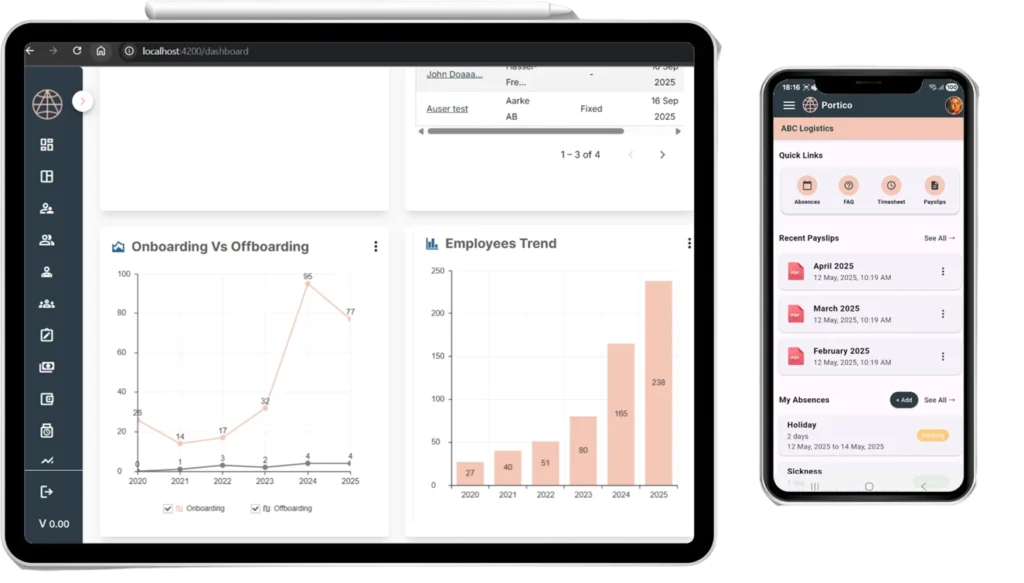
Payroll platform
Global payroll simplified
Your intuitive hub for paying global teams. Simple, powerful, and designed to scale with you — no complexity, just clarity.
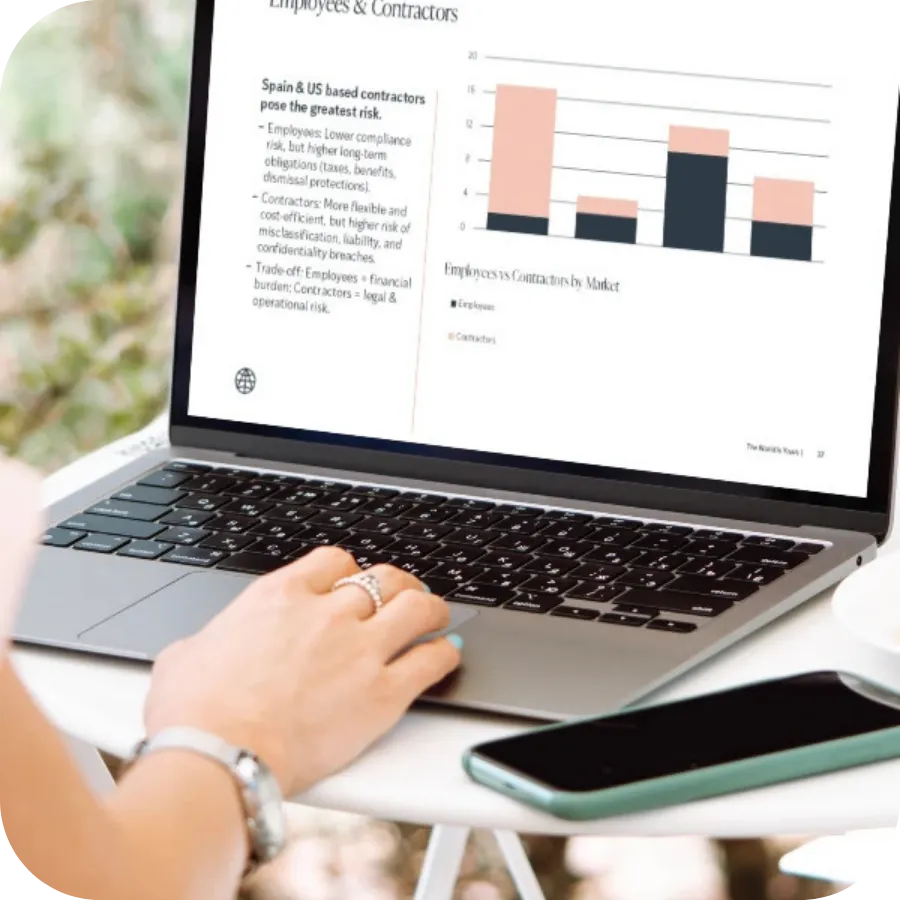
Audit
Eliminate barriers to growth
Avoid compliance issues across your global workforce and uncover opportunities to improve profitability. On a quarterly basis we’ll help you audit your global talent strategy to ensure it aligns with your business goals.
Intelligence
Build a data-driven talent strategy
Grow confidently and profitably with access to the latest TopSource insights & data on hiring markets, salary benchmarking & benefits.
Advisory
Expert guidance that turns complexity into clarity.
Whether you’re managing a global acquisition or entering a new market, you get clear guidance to navigate complex decisions, avoid delays, and accelerate your global expansion.


Guam payroll FAQs
Through a US-style payroll with Guam’s own income tax: withhold Guam income tax for the Department of Revenue and Taxation, withhold and match Social Security and Medicare for the IRS, and pay wages within seven days of the end of each pay period. There is no unemployment tax.
Residents pay Guam income tax instead, under a mirror code that copies the US Internal Revenue Code at the same rates, and file with Guam’s Department of Revenue and Taxation. Social Security and Medicare are federal and apply in Guam as in the states.
6.2% Social Security on wages up to $184,500 and 1.45% Medicare on all wages, 7.65% in total. FUTA does not apply in Guam and there is no unemployment insurance tax, but employers must carry workers’ compensation insurance.
No. The Federal Unemployment Tax Act does not apply to employers in Guam, American Samoa or the Northern Mariana Islands, and Guam has no unemployment insurance programme of its own.
$9.25 an hour since 1 September 2021, under Public Law 36-1. That is above the federal minimum of $7.25, and full-time work at the minimum comes to $19,240 a year.
Within seven days of the end of each pay period. A dismissed employee must be paid within 24 hours and an employee who resigns within seven days of the end of the pay period.
Non-exempt employees earn 1.5 times their regular rate for hours over 40 in a workweek under the Fair Labor Standards Act. Overtime is counted by the week, and the law sets no limit on the hours an adult employee can work.
Each employee receives a Form W-2GU by 31 January showing wages and Guam income tax withheld. Copy A goes to the Social Security Administration with Form W-3SS and another copy to the Department of Revenue and Taxation.
Yes. Guam’s workers’ compensation law requires almost every employer to insure work-injury compensation with an insurer authorised by the Workers’ Compensation Commission. Employers of domestic workers are the main exception, and failing to insure is a misdemeanor.
Running payroll in Guam requires a US employer identification number and registration with Guam’s Department of Revenue and Taxation, which normally means a local entity or a registered branch. Without one, the usual route is an Employer of Record. TopSource can run payroll for your Guam entity or employ your team through our Employer of Record service.
Looking at other markets too?
We help organizations employ and pay teams in 164 countries.