Payroll Services in Malta
Fully managed Maltese payroll – social security applied at the right category and cohort, and on the right base, with the maternity fund contribution separated out; the FS5 remitted by the last working day of the following month; and the seven 2026 income tax computations applied to the employees who actually qualify for them, with a named specialist a phone call away.

TopSource rated 5/5 by our customers
What Maltese payroll actually involves
Maltese payroll is administratively simple and full of specific rules that do not exist anywhere else. There is one tax authority, one social security system, the euro, and no regional variation. But social security is charged on contractual basic wage only – excluding overtime, bonus, allowances and commission by statute – and it is expressed as categories with a floor and a fixed cap rather than as a percentage, so employer cost stops rising at about €29,000 of basic pay. There are four statutory cash payments a year that are not salary and not a thirteenth month. Annual leave is measured in hours and recalculated every January from the number of public holidays that happen to fall at a weekend. The cost of living adjustment is a flat cash amount fixed by legal notice each December, and whether it lands on top of a collective agreement or inside it turns on how that agreement is drafted. Sectoral Wage Regulation Orders bind regardless of the contract. And from 1 January 2026 there are seven income tax computations, four of which carry nationality conditions. None of it is hard. All of it is specific.
Our Partners Globally









Calculate Your Employee Costs in Malta
Enter a gross annual basic salary to see the full employer cost of a Maltese employee – social security at 10% of basic wage, capped at €55.93 a week or €2,908.36 a year; the maternity fund contribution at 0.30%, capped at €1.68 a week or €87.36 a year; and the €512.52 of statutory bonuses and weekly allowances. It assumes the salary entered is contractual basic pay, because overtime, commission and allowances are outside social security, and an employee born on or after 1 January 1962; for employees born earlier the cap is €49.04 a week.
Employment Cost Calculator
*Indicative figures only and not definitive legal advice. Local regulations change frequently. Consult an expertMalta
| British Pound | Malta | |
|---|---|---|
| Base Salary (per month) | ||
| Employer Contributions | ||
| Total Cost (Annual) | ||
| Total Cost (Monthly) |
“Their expertise and understanding of the unique hiring, payment, and human resource practices in each country has been nothing short of outstanding. Our Client Success Manager, has done just that … ensured our success. Her availability and willingness to engage on a personal level has made all the difference.”

“Excellent service, especially from our account manager who has gone above and beyond to help us use the platform effectively. Our manager, significantly simplifies my workload. It is like having your own TopSource HR representative on your team.”
“TopSource has been our go-to resource for international hiring. They are responsive, thorough, respectful and knowledgeable. The Client Success team has provided us with the utmost customer service, and the more we use TopSource, the more, it gives us access to more resources and knowledge.”
Employer Costs in Malta Explained
Employer statutory cost in Malta falls from about 14.6% of salary at the minimum wage to about 3.5% at €100,000, which puts it among the lowest in the European Union for a senior hire and makes it an ordinary-cost jurisdiction at the bottom of the scale. Employer social security is 10% of the basic weekly wage, but with a fixed floor of €22.94 a week in Category B and a fixed cap of €55.93 a week in Category D – so maximum employer social security is about €2,908 a year whatever the salary. The maternity fund contribution adds 0.30% on the same base, capped at about €87. And the four statutory bonuses and allowances add a flat €512.52 per employee per year, which is 4.3% of a minimum-wage salary and 0.5% of €100,000. There is no mandatory employer pension, no statutory severance, and no employer-funded long-term sick pay. Two things are not in those percentages and both matter: maternity leave is 14 weeks of employer cash reclaimed only after the employee returns, and where a Wage Regulation Order applies, sick leave can run to thirty days at full pay rather than two weeks. Here’s the breakdown.
Employer and employee social security contributions in Malta are each 10% of the basic weekly wage – but only within the middle band. The Malta Tax and Customs Administration publishes Class 1 contributions as a table of categories keyed to the basic weekly wage, and at both ends of that table the contribution is a fixed euro amount rather than a percentage. For 2026, an employee aged 18 or over earning up to €229.44 a week sits in Category B at a flat €22.94 from each side. Between €229.45 and €559.30 a week, Category C applies at 10% each. Above €559.30, Category D applies at a fixed €55.93 each – which is exactly 10% of the ceiling, and is why the cap behaves the way it does.
Malta operates two parallel ceilings, and the dividing line is a date of birth. Employees born up to 31 December 1961 are capped on a basic weekly wage of €490.38, giving a fixed €49.04. Employees born on or after 1 January 1962 are capped at €559.30, giving €55.93. That is a €358 difference in annual employer cost per employee, driven by one day. Date of birth is a rate-determining field in Maltese payroll, not a demographic one, and a one-day error at onboarding produces a whole-year variance and a year-end reconciliation that will not balance.
The base is narrower than most employers expect, and this is the single most consequential line in Maltese payroll. Article 2 of the Social Security Act defines the basic weekly wage as the gross wage excluding any remuneration for overtime, any form of bonus, any extra allowances, any remuneration in kind and commissions. Only contractual basic pay counts. The practical consequences are large: the €512.52 of statutory bonuses and allowances is taxable but not contributory; overtime, commission and car allowances are outside social security and outside the maternity fund entirely; and a sales role with a €30,000 basic and €60,000 of commission contributes as a €30,000 employee. A pay run that computes contributions on gross rather than basic over-deducts from the employee, over-charges the employer, overstates the monthly return and has to be unwound across the year. In June, September, March and December – the bonus and allowance months – it is the most common error there is.
Two further mechanics matter operationally. Contributions are weekly and attach to the Monday falling in the pay period, so the annual charge is the category rate multiplied by the number of Mondays, not the monthly salary multiplied by 10% – and a year with 53 Mondays costs more than one with 52. And in Category B the employee may elect to pay 10% of actual basic wage instead of the flat €22.94, while the employer’s €22.94 is unchanged either way. For a part-timer earning below the minimum wage that breaks the symmetry between the two sides of the payslip, and payroll systems that mirror the employer figure from the employee figure get it wrong. Alongside all of this sits the maternity fund contribution: 0.30% of basic wage, employer only, capped on the same structure at €1.68 a week, and it must not be deducted from the employee.
Employer statutory cost in Malta falls from about 14.6% of salary at the minimum wage to about 3.5% at €100,000, and it is one of the steepest declines in Europe. The reason is that both employer costs are effectively fixed above a modest threshold. Employer social security stops rising at €29,083.60 of annual basic pay and is capped at about €2,908 a year. The maternity fund contribution caps at about €87. And the statutory bonuses are a flat €512.52 regardless of salary. Add those together and the total statutory cost of a €100,000 employee in Malta is roughly €3,508 – a number most finance directors do not believe the first time they see it.
That puts Malta among the lowest-cost jurisdictions in the European Union for senior hires, and it is worth being precise about why. There is no employer pension obligation – Malta has no mandatory second pillar, and the auto-enrolment proposal consulted on in 2025 contemplates voluntary employer contributions only. There is no statutory severance or redundancy payment at all. There is no employer-funded long-term sick pay beyond two weeks. And the contribution ceiling sits at a basic salary of about €29,000, which is low by European standards. A €150,000 executive costs an employer the same €3,508 in statutory contributions as a €35,000 supervisor.
The flip side is the bottom of the scale, and it is the part that is usually missed. Because the statutory bonuses are a flat cash amount, they are steeply regressive: €512.52 is 4.3% of a minimum-wage salary and 0.5% of €100,000. Add the Category B contribution floor and the total employer cost at the minimum wage is about 14.6% – higher than Ireland’s lower band and comparable to the United Kingdom. Malta is a cheap place to employ a professional and an ordinary-cost place to employ a minimum-wage worker, which is the reverse of the United Kingdom’s shape and worth knowing if you are choosing where to put a service operation.
Two costs sit outside those percentages and both are real. Maternity leave is an employer cash-flow item: 14 weeks at full pay, reclaimed from the Maternity Leave Trust Fund only after the employee returns to work. And where a Wage Regulation Order covers the sector – and there are dozens in force, binding regardless of what the contract says – sick leave entitlement can run to between six and thirty days at full pay rather than the two statutory weeks. Checking whether a Wage Regulation Order applies is the first thing to do on any Maltese cost model, because it can move the answer materially and no amount of contract drafting displaces it.
Malta’s income tax is withheld cumulatively through the Final Settlement System at 15%, 25% and 35% above a zero-rate band, and from 1 January 2026 there are seven computations rather than three. The three legacy computations remain: single, with a zero-rate band to €12,000; married, to €15,000; and parent, to €13,000. Budget 2026 added four more, differentiated by number of children – married with one child to €17,500, married with two or more to €22,500, parent with one child to €14,500, and parent with two or more to €18,500. Each table works on a subtract mechanic: tax equals chargeable income times the band rate, less a fixed subtract amount, which keeps the tables continuous at the band boundaries.
The new computations carry eligibility conditions that are genuinely new administrative burden, and they are nationality conditions. The wider married and parent bands apply only where at least one spouse, or the individual, is a national of Malta or another EU or EEA member state – or is a long-term resident under the Status of Long-Term Residents Regulations and the child was born in Malta and is resident in Malta. For a non-parent claiming the parent rates there is a further condition: marriage or civil union to the child’s parent, or a public deed of cohabitation registered in the Public Registry. So a third-country national employee with two children is not automatically entitled to the wider bands, and nationality and a child’s place of birth have become tax-code-determining facts captured on the employee’s status declaration. For an employer with a mixed workforce this is a real change in what the payroll function has to know.
The phase-in continues. The zero-rate band for a married couple with one child moves to €20,000 in 2027 and €22,500 in 2028; with two or more children, to €30,000 then €37,000. Parent computations move to €16,000 then €18,000, and €24,000 then €30,000. So the tax code for an employee with children changes in each of the next two Januaries without anything changing in their circumstances, which is not how most payroll change control is set up.
Two separate final rates are withheld at source and they sit on their own lines of the monthly return. Part-time employment income is taxed at a final 10%, capped at €10,000 of part-time employment income a year, so a maximum of €1,000 of tax – but only where the employee is also a full-time employee, a pensioner, or a full-time student or apprentice, works under 30 hours a week in the part-time role, and the part-time employer is not the same organisation as the full-time one. A person who works only part-time cannot use it. Qualifying overtime is taxed at 15% under the Tax on Overtime Rules, for non-managerial employees whose basic weekly wage does not exceed €375, capped at the lower of €10,000 a year or the qualifying hours times a rate no higher than twice the hourly equivalent of basic pay, with an opt-out available. Both are withheld by the employer rather than reclaimed by the employee, and booking either into the main emoluments line is a misposting that only reconciles at year end by accident. And where no status declaration is filed at all, withholding is at a flat 35%.
The cost of living adjustment is mandatory, flat and set annually by legal notice. For 2026 it is €4.66 a week – €242.32 a year – under Legal Notice 290 of 2025, made on 22 December 2025, and it is down from €5.24 in 2025. Every whole-time employee is entitled to the full amount and part-timers to a pro-rata hourly share, benchmarked to a comparable whole-timer or a Wage Regulation Order, or failing that one-fortieth of the weekly increase. Because it is a cash amount rather than a percentage it is worth proportionally far more to low earners, and it is computed from a twelve-month moving average of the Retail Price Index to September.
How the adjustment meets a collective agreement is financially decisive every January, and it turns entirely on drafting. Where the agreement’s increases are expressed as inclusive of the cost of living adjustment, the employee receives only the agreed amount provided it equals or exceeds the statutory entitlement, and nothing further is due. Where the agreement is silent, or expressed as additional to it, the adjustment is paid on top. A foreign employer inheriting an agreement drafted as increases additional to statutory COLA pays twice, every year, and usually does not discover it until an inspection or a union query.
The national minimum wage for 2026 is €229.44 a week for employees aged 18 and over, €222.66 at 17 and €219.82 under 17, set by Legal Notice 289 of 2025 with effect from 1 January 2026. The 2026 increase of €7.66 decomposes as the €4.66 cost of living adjustment plus a €3.00 statutory step under the national agreement signed in October 2023 – a phased uplift over and above the annual adjustment, of which one step remains: €4 in 2027. Part-time rates must not fall below the applicable weekly minimum divided by forty. There is a detail here worth noticing: the €229.44 minimum wage is simultaneously the ceiling of social security Category B, so a minimum wage rise automatically re-bands the lowest-paid employees for contribution purposes.
Above the statute sit the Wage Regulation Orders, and they are the thing a foreign employer most often does not know exists. These are sectoral instruments made under the Employment and Industrial Relations Act that bind every employer in the sector regardless of what the contract of employment says, and they set minimum conditions beyond the statutory floor. The most consequential is sick leave: where an order applies, entitlement can run from six to thirty days at full pay rather than the statutory two weeks. Orders also set grades, allowances and overtime premia. Establishing whether one covers the activity is the first question on any Maltese cost model, and it is not answerable from the contract.
Annual leave is expressed in hours and recalculated every year. The statutory base under the Organisation of Working Time Regulations is four weeks plus 32 hours – 192 hours on a 40-hour week – and where a public holiday falls on a Saturday, Sunday or the employee’s weekly day of rest, the employee is entitled to an additional day of leave in the same year. In 2026 three public holidays fall at a weekend: Sette Giugno on Sunday 7 June, the Assumption on Saturday 15 August and Republic Day on Sunday 13 December. So 2026 entitlement is 216 hours, or 27 days. 2025 was 224 hours. A system with either figure hard-coded is wrong in alternate years, and mid-year joiners must be pro-rated off the current year’s number. An employer may direct only the equivalent of twelve working days for shutdowns and bridge holidays, once agreed leave cannot be cancelled unilaterally, and untaken accrued leave must be paid out on termination – with a minimum fine of €465 for failure, plus the obligation to pay.
Sick pay is full pay less the state benefit, and the offset starts on day four. The employer pays the first three days of any period of sickness in full, then full wage less the sickness benefit rate – and it is the employee, not the employer, who claims that benefit from the Department of Social Security. Two symmetrical errors follow: applying the offset from day one underpays, and paying full wage throughout overpays with no recovery. Statutory entitlement is the equivalent in hours of two working weeks a year where no Wage Regulation Order applies, on a certified basis. Paternity leave is ten working days paid, from the 2022 transposition of the EU Work-Life Balance Directive. Parental leave is four months per parent with eight weeks paid at the sickness benefit rate. Two new entitlements arrived on 1 January 2026: seven days of miscarriage leave and seven days of parental bereavement leave.
On termination there is no statutory severance in Malta at all. Notice runs from one week for service over a month to twelve weeks for over eleven years, and where the employee is not permitted to work the notice the employer pays full wages for the unexpired period. What is easy to miss is that the final payslip must carry the pro-rata statutory bonus and weekly allowance computed to the exact day of termination – €0.74 per calendar day and €4.66 per working week – and that is a statutory entitlement, not a courtesy. Two further constraints surprise foreign employers. Probation attaches by operation of law unless excluded in writing, runs six months or twelve for managerial and technical staff earning at least double the minimum wage, and is suspended by any approved leave of two weeks or more – so the probation end date moves, and a dismissal on the originally diarised date after three weeks’ leave is out of time. And redundancy selection is statutory last-in-first-out under the Employment and Industrial Relations Act, with a one-year re-engagement right if the post reopens; a competency-scored selection matrix imported from another jurisdiction is exposed, because Maltese law prescribes the criterion. Unfair dismissal claims go to the Industrial Tribunal within four months of termination.
Employing third-country nationals changed materially in 2025 and most guides have not caught up. The Single Permit is the standard route – employer-initiated, up to four months’ processing, €600 for the first permit and €150 a year on renewal, and working before it issues is illegal. The Malta Labour Migration Policy then added two constraints that are about the employer rather than the candidate. Applications fail where the employer’s own termination rate is too high, on thresholds tightening to 50% for small, 45% for medium and 40% for large employers by July 2026. And Workforce Application Limits cap headcount growth through third-country nationals from a company’s third operational year – 200% for micro, 100% small, 50% medium, 25% large. Positions must be advertised for two to three weeks, on the Jobsplus and EURES portal since October 2025, and salaries must be paid electronically through licensed financial institutions. The Key Employee Initiative at €45,000 and the Specialist Employee Initiative at €30,000 are fast-track routes – five working days for the former – and, importantly, both are excluded from the workforce limits and the termination-rate monitoring, which is a real reason to route senior hires through them. Separately, the Highly Qualified Persons Rules and the sector schemes were replaced from 1 January 2026 by Legal Notice 20 of 2026: a single 15% flat rate on qualifying income up to €7 million, a minimum salary of €65,000 rising €10,000 every five years, five years renewable twice, and a sunset at the end of 2040.
Maltese employer contribution rates, 2026
| Contribution | Employer | Employee | Applies to |
|---|---|---|---|
| Social security – Category B | €22.94 a week | €22.94 a week, or 10% by election | Aged 18 or over, basic weekly wage up to €229.44. Employer amount is fixed either way |
| Social security – Category C | 10% | 10% | Basic weekly wage €229.45 to €559.30 (born on/after 1 Jan 1962) |
| Social security – Category D | €55.93 a week | €55.93 a week | Basic weekly wage above €559.30. Fixed amount – this is the cap |
| Social security – Category C/D, born before 1962 | 10%, capped €49.04 a week | Same | Ceiling is €490.38 a week rather than €559.30 |
| Maternity fund contribution | 0.30%, capped €1.68 a week | Nil | Employer only. Must not be deducted from the employee |
| The State’s own share | 50% of the combined employee and employer contribution | — | Social Security Act art. 7(2)(b). Malta is a genuinely tripartite system |
| Income tax | — | 0% / 15% / 25% / 35% | Seven computations from 1 January 2026. Zero-rate band €12,000 to €22,500 |
| Part-time employment tax | — | 10% final | Capped at €10,000 of part-time income. Conditions apply |
| Qualifying overtime tax | — | 15% final | Non-managerial, basic weekly wage not over €375, capped at €10,000 a year |
| Statutory bonuses and allowances | €512.52 a year | — | Taxable, but NOT subject to social security or the maternity fund |
| Cost of living adjustment | €4.66 a week | — | L.N. 290 of 2025. Mandatory for every employee, pro-rata for part-timers |
| Total employer statutory cost | ≈ 14.6% at the minimum wage, ≈ 3.5% at €100,000 | — | Capped at about €3,508 a year in total. See the cost tables below |
The seven income tax computations from 1 January 2026
| Computation | 2025 zero-rate band | 2026 zero-rate band | Note |
|---|---|---|---|
| Single | €12,000 | €12,000 | Unchanged. The legacy computation |
| Married | €15,000 | €15,000 | Unchanged. Applies where the new conditions are not met |
| Parent | €13,000 | €13,000 | Unchanged. The legacy parent computation |
| Married with one child | — | €17,500 | NEW. Rises to €20,000 in 2027 and €22,500 in 2028 |
| Married with two or more children | — | €22,500 | NEW. Rises to €30,000 in 2027 and €37,000 in 2028 |
| Parent with one child | — | €14,500 | NEW. Rises to €16,000 in 2027 and €18,000 in 2028 |
| Parent with two or more children | — | €18,500 | NEW. Rises to €24,000 in 2027 and €30,000 in 2028 |
| Eligibility condition | Residence only | Residence AND nationality | At least one spouse Maltese or EU/EEA, or long-term resident with a Malta-born resident child |
| Child definition | — | Not over 18, or not over 23 in full-time education | Applies to all four new computations |
| What payroll must now capture | Marital status | Marital status, number of children, nationality, child’s place of birth and residence | On the FS4. This is genuinely new administrative burden |
Employer statutory cost by basic salary, 2026
| Basic salary | Per week | Cat. | Social security | Maternity fund | Bonuses | Total | Effective rate |
|---|---|---|---|---|---|---|---|
| €11,930.88 | €229.44 | B | €1,192.88 | €35.88 | €512.52 | €1,741.28 | 14.59% |
| €15,000 | €288.46 | C | €1,500.00 | €45.00 | €512.52 | €2,057.52 | 13.72% |
| €20,000 | €384.62 | C | €2,000.00 | €60.00 | €512.52 | €2,572.52 | 12.86% |
| €25,000 | €480.77 | C | €2,500.00 | €75.00 | €512.52 | €3,087.52 | 12.35% |
| €29,083.60 | €559.30 | C | €2,908.36 | €87.36 | €512.52 | €3,508.24 | 12.06% |
| €35,000 | €673.08 | D | €2,908.36 | €87.36 | €512.52 | €3,508.24 | 10.02% |
| €50,000 | €961.54 | D | €2,908.36 | €87.36 | €512.52 | €3,508.24 | 7.02% |
| €75,000 | €1,442.31 | D | €2,908.36 | €87.36 | €512.52 | €3,508.24 | 4.68% |
| €100,000 | €1,923.08 | D | €2,908.36 | €87.36 | €512.52 | €3,508.24 | 3.51% |
Where the money goes, and what is not there at all
| Component | At €20,000 | At €50,000 | At €100,000 | Note |
|---|---|---|---|---|
| Employer social security | €2,000 | €2,908 | €2,908 | 10% of basic, capped at €55.93 a week. This is the whole of it |
| Maternity fund contribution | €60 | €87 | €87 | 0.30% of basic, employer only, same cap |
| Statutory bonuses and allowances | €513 | €513 | €513 | €512.52 flat, regardless of salary – so it is regressive |
| Employer pension | €0 | €0 | €0 | No mandatory second pillar. Auto-enrolment is still a proposal |
| Statutory severance | €0 | €0 | €0 | Malta has none at all |
| Total statutory employer cost | ≈ €2,573 | ≈ €3,508 | ≈ €3,508 | 12.86% at €20,000, 7.02% at €50,000, 3.51% at €100,000 |
| Statutory sick pay, when it arises | 3 days full, then wage less benefit | 3 days full, then wage less benefit | 3 days full, then wage less benefit | Two weeks a year – unless a Wage Regulation Order applies, when it can be 6 to 30 days |
| Maternity leave, when it arises | 14 weeks at full pay | 14 weeks at full pay | 14 weeks at full pay | Employer cash flow, reclaimed from the Trust Fund only after the employee returns |
Social security categories are decided on the basic weekly wage – gross pay excluding overtime, any form of bonus, extra allowances, remuneration in kind and commissions, per article 2 of the Social Security Act. Contributions attach to the Monday falling in the pay period, so the annual charge is the category amount multiplied by the number of Mondays in the year, not the monthly salary multiplied by 10%; 2026 has 52. Two parallel ceilings are in force: €490.38 a week for employees born up to 31 December 1961 and €559.30 for those born on or after 1 January 1962. The cost tables assume an employee born on or after 1 January 1962, 52 contribution weeks, and that the salary shown is contractual basic wage with no overtime, commission or allowances – in a real workforce the contributory base is often lower than total pay, and the effective rates fall further. The last two lines of the second table are shown outside the total because neither is an annual cost: sick pay costs something only when someone is sick, and the 14 weeks of maternity pay are a working-capital item recovered from the Trust Fund. These are TopSource calculations from the verified 2026 rates and categories, not published figures.
Rates, thresholds, bands and statutory amounts shown are for the 2026 calendar year and were verified on 11 September 2026. Almost every figure on this page is reset on 1 January following Budget day, which was 27 October 2025 for 2026 and is expected in late October 2026 for 2027: the cost of living adjustment, the minimum wage, the social security category thresholds, benefit rates and the statutory bonus amounts. Annual leave is recalculated each year from the number of public holidays falling at a weekend. Income tax bands for employees with children phase again on 1 January 2027 and 1 January 2028. Where a Wage Regulation Order covers the sector it may set more favourable conditions than the statutory minimums shown. This page is general information, not tax or legal advice.
How our Maltese payroll service works
Why TopSource for Maltese Payroll
TopSource for payroll, Employer of Record or any other of our services represents a simpler, more reliable and transparent option. If you would rather not employ staff in Malta directly, our Employer of Record in Malta can employ them on your behalf.
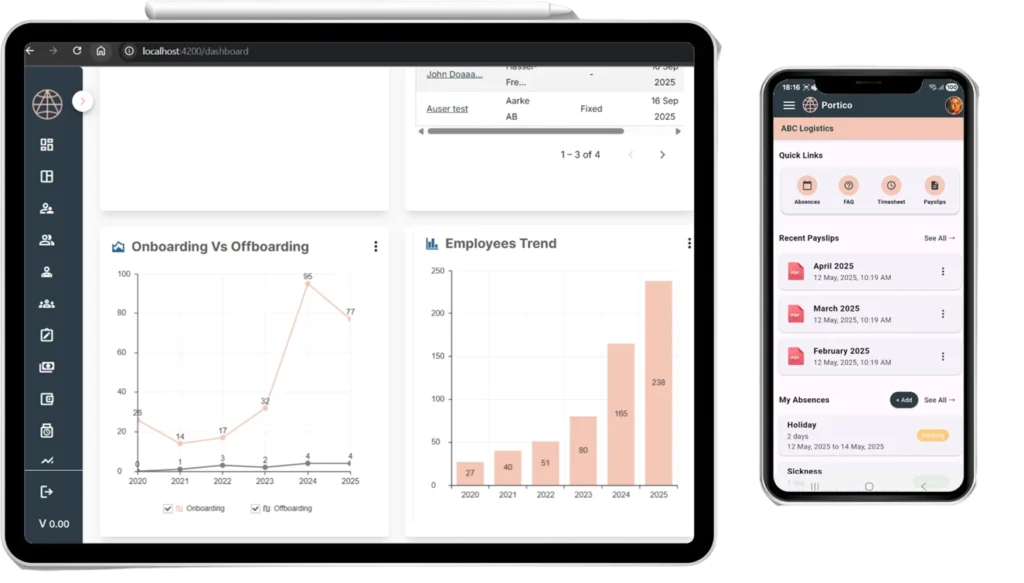
We don’t hide fees or sneak price increases. We run Maltese payroll in-house and file under your own PE number rather than a bureau’s, so the same team that submits your FS5 answers your calls. You get a named account manager, one consolidated monthly invoice covering salaries, social security, taxes and fees, and one live Portico view of Malta beside every other country we run for you. Portico syncs with your time-tracking, leave and HR systems via API – set up by our onboarding team, not left to yours. GDPR, SOC 2 and ISO 27001 certified.

Other services
Accelerating your growth in Malta and beyond
TopSource goes far beyond payroll, acting as your end-to-end partner in global workforce management. From Employer of Record (EOR) services and seamless entity setup to localized accountancy and fractional HR support, we cover every aspect of international employment.

Meet our experts for Malta
Whether you’re entering the market or scaling operations, our specialists provide the insight and guidance you need to succeed in one of the world’s most dynamic and regulated employment landscapes. With TopSource, you’re backed by real experts, every step of the way.

Beyond a payroll serviceA globalization accelerator
Payroll platform
Global payroll simplified
Your intuitive hub for paying global teams. Simple, powerful, and designed to scale with you — no complexity, just clarity.
Audit
Eliminate barriers to growth
Avoid compliance issues across your global workforce and uncover opportunities to improve profitability. On a quarterly basis we’ll help you audit your global talent strategy to ensure it aligns with your business goals.
Intelligence
Build a data-driven talent strategy
Grow confidently and profitably with access to the latest TopSource insights & data on hiring markets, salary benchmarking & benefits.
Advisory
Expert guidance that turns complexity into clarity.
Whether you’re managing a global acquisition or entering a new market, you get clear guidance to navigate complex decisions, avoid delays, and accelerate your global expansion.



Maltese payroll FAQs
Employer social security in Malta is 10% of the basic weekly wage, subject to a floor and a hard cap. For 2026 an employee aged 18 or over earning up to €229.44 a week attracts a fixed €22.94; between €229.45 and €559.30 a week the rate is 10%; and above €559.30 the contribution is a fixed €55.93 a week. Maximum employer social security is therefore about €2,908 a year whatever the salary, plus about €87 for the maternity fund contribution. Employees born before 1 January 1962 are capped lower, at €49.04 a week.
Contributions are charged on the basic weekly wage only. Article 2 of the Social Security Act defines that as gross wage or salary excluding any remuneration for overtime, any form of bonus, any extra allowances, any remuneration in kind and commissions. So overtime, commission, car allowances, benefits in kind and the statutory bonuses are all outside social security and outside the maternity fund. A sales role with a €30,000 basic and €60,000 of commission contributes as a €30,000 employee, which is why a pay run that computes contributions on gross rather than basic over-deducts from both sides.
Maltese employers pay four statutory cash payments a year totalling €512.52 per employee: a €135.10 bonus in June, a €135.10 bonus paid between 15 and 23 December, and weekly allowances of €121.16 each in March and September. They are fully taxable through the Final Settlement System, but they are not subject to social security or the maternity fund contribution because the Social Security Act excludes bonuses and allowances from the contributory base. They pro-rate on two different formulas – the bonus at €0.74 per calendar day and the allowance at €4.66 per working week – and the pro-rata amount must appear on a leaver’s final payslip.
Statutory annual leave in Malta for 2026 is 216 hours, or 27 days on a 40-hour week. The base entitlement under the Organisation of Working Time Regulations is four weeks plus 32 hours – 192 hours – and an additional day is added for each public holiday falling on a Saturday, Sunday or the employee’s weekly day of rest. Three fall at a weekend in 2026, adding 24 hours. The figure is recalculated every year: 2025 was 224 hours. An employer may direct only the equivalent of twelve working days for shutdowns, and untaken accrued leave must be paid out on termination.
The FS5 monthly payment advice, which carries income tax, social security and the maternity fund contribution together, is due by the last working day of the month following the month in which the emoluments were paid. At year end there are two separate deadlines: the FS3 statement of earnings must reach each employee by 31 January, and the FS3s together with the FS7 annual reconciliation must reach the Malta Tax and Customs Administration by 15 February. Employers with ten or more FS3s must file electronically. Interest on late payment runs at 0.6% a month, roughly 7.2% a year.
Statutory sick leave where no Wage Regulation Order applies is the equivalent in hours of two working weeks a year, on a certified basis. The employer pays the first three days of any period of sickness in full, then pays full wage less the sickness benefit payable under the Social Security Act – and it is the employee, not the employer, who claims that benefit from the Department of Social Security. Where a Wage Regulation Order covers the sector, entitlement can run from six to thirty days at full pay instead, and the order binds regardless of what the contract of employment says.
The national minimum wage from 1 January 2026 is €229.44 a week for employees aged 18 and over, €222.66 at age 17 and €219.82 under 17, set by Legal Notice 289 of 2025. That is €5.74 an hour on a 40-hour week. The €7.66 increase comprises the €4.66 cost of living adjustment plus a €3.00 statutory step under the national agreement signed in October 2023, which has one further step of €4 remaining in 2027. Note that €229.44 is also the ceiling of social security Category B, so a minimum wage rise re-bands the lowest-paid employees for contribution purposes.
Maternity leave in Malta is 18 weeks, and the employer funds the first 14 of them at full pay, reclaiming from the Maternity Leave Trust Fund only after the employee returns to work. The claim requires social security receipts covering the nine-month pregnancy period, payslips for the 14 weeks and the Jobsplus employee roster. Weeks 15 to 18 are unpaid by the employer. The scheme is funded by the employer-only maternity fund contribution of 0.30% of basic weekly wage, capped at €1.68 a week, which must not be deducted from the employee.
Yes, through the Single Permit – a combined residence and work authorisation initiated by the employer, taking up to four months, costing €600 for the first permit and €150 a year on renewal. Employment before the permit issues is illegal. Since the Malta Labour Migration Policy took effect, approval also depends on the employer’s own statistics: applications fail where the termination rate exceeds thresholds that tightened to 40% to 50% by July 2026, and Workforce Application Limits cap headcount growth through third-country nationals from the third operational year. The Key Employee Initiative at €45,000 and the Specialist Employee Initiative at €30,000 are fast-track routes and are excluded from both constraints.
Malta has no statutory severance or redundancy payment. Notice on an indefinite contract runs from one week for service over one month, to two weeks over six months, four weeks over two years, eight weeks over four years, and one additional week per year thereafter to a maximum of twelve weeks. Where the employee is not permitted to work the notice, full wages for the unexpired period are payable. Redundancy selection is statutory last-in-first-out, with a re-engagement right if the post reopens within a year. Probation is six months, or twelve for managerial and technical staff earning at least double the minimum wage, and is suspended by any approved leave of two weeks or more.
Looking at other markets too?
We help organizations employ and pay teams in 164 countries.