


Fully Managed Payroll in Nepal.
No admin. No guesswork. Just accurate payments and expert support just a phone call away.

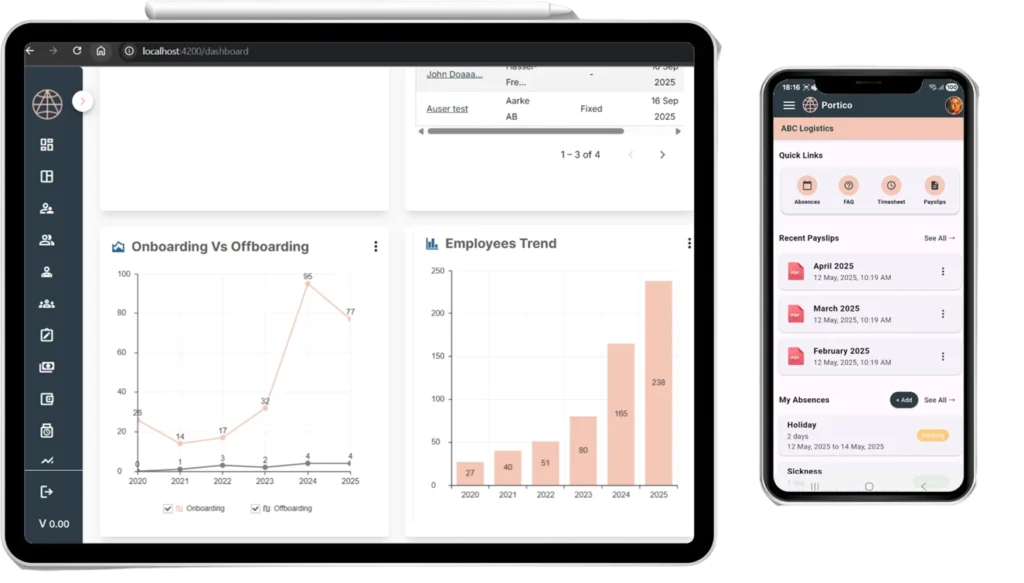
TopSource rated 5/5 by our customers

More than a payroll platform

Simplified Payroll

Dedicated Support

Access to Expertise

Sync with your HR Systems
“Their expertise and understanding of the unique hiring, payment, and human resource practices in each country has been nothing short of outstanding. Our Client Success Manager, has done just that … ensured our success. Her availability and willingness to engage on a personal level has made all the difference.”

“Excellent service, especially from our account manager who has gone above and beyond to help us use the platform effectively. Our manager, significantly simplifies my workload. It is like having your own TopSource HR representative on your team.”
“TopSource has been our go-to resource for international hiring. They are responsive, thorough, respectful and knowledgeable. The Client Success team has provided us with the utmost customer service, and the more we use TopSource, the more, it gives us access to more resources and knowledge.”
Other services
Accelerating your growth in Nepal and beyond
TopSource goes far beyond payroll, acting as your end-to-end partner in global workforce management. From Employer of Record (EOR) services and seamless entity setup to localized accountancy and fractional HR support, we cover every aspect of international employment.

Meet our experts for Nepal
Whether you’re entering the market or scaling operations, our specialists provide the insight and guidance you need to succeed in one of the world’s most dynamic and regulated employment landscapes. With TopSource, you’re backed by real experts, every step of the way.

Beyond a payroll serviceA globalization accelerator
Payroll platform
Global payroll simplified
Your intuitive hub for paying global teams. Simple, powerful, and designed to scale with you — no complexity, just clarity.
Audit
Eliminate barriers to growth
Avoid compliance issues across your global workforce and uncover opportunities to improve profitability. On a quarterly basis we’ll help you audit your global talent strategy to ensure it aligns with your business goals.
Intelligence
Build a data-driven talent strategy
Grow confidently and profitably with access to the latest TopSource insights & data on hiring markets, salary benchmarking & benefits.
Advisory
Expert guidance that turns complexity into clarity.
Whether you’re managing a global acquisition or entering a new market, you get clear guidance to navigate complex decisions, avoid delays, and accelerate your global expansion.



Looking at other markets too?
We help organizations employ and pay teams in 164 countries.


















































































































































Nepal payroll: frequently asked questions
It means handing the end-to-end payroll cycle for your Nepal-based staff to a specialist provider: calculating gross-to-net pay in Nepali rupees (NPR), applying the progressive income-tax slabs, deducting and remitting TDS to the Inland Revenue Department (IRD), and managing Social Security Fund (SSF) or Provident Fund contributions. The provider also handles monthly filings, payslips, and compliance under Nepal’s mid-July-to-mid-July fiscal year (FY 2082/83 BS runs ~July 2025-July 2026). This removes the need for your in-house team to track frequent budget-driven rate changes and IRD portal deadlines.
Nepal uses progressive annual slabs on taxable salary. For FY 2082/83, a single individual pays 1% social security tax on the first NPR 500,000, then 10% (next 200,000), 20% (next 300,000), 30% (next 1,000,000), 36% on income from NPR 2,000,000-5,000,000, and 39% above NPR 5,000,000; couples get a wider first band (1% up to NPR 600,000). The 1% first-band levy is waived for employees who contribute to the SSF, since their SSF contribution already meets the social-security obligation. Tax is withheld monthly by the employer as TDS.
Under the Social Security Fund (SSF) scheme the total contribution is 31% of basic salary: 20% from the employer and 11% from the employee, covering provident fund (10%+10%), gratuity (8.33%) and social-security/medical, accident and pension protections. This modern SSF scheme replaces the traditional split of a 10%+10% Provident Fund plus a separate ~8.33% gratuity; the Citizen Investment Trust (CIT) remains a separate voluntary savings option. SSF is mandatory for registered private employers, and contributions are deposited monthly (within about 15 days of month-end).
Beyond gross salary, the largest statutory employer cost is the 20% SSF contribution on basic salary (versus roughly 10% PF plus gratuity under the older non-SSF model). Employers must also administer the employee’s 11% SSF deduction and withhold monthly income tax (TDS) for remittance to the IRD. There is no separate employer ‘payroll tax’ beyond these social-security and withholding obligations, but employers carry the compliance burden of monthly deposits, e-TDS returns and SSF filings.
Employers act as withholding agents: they deduct income tax (TDS) from each salary payment and deposit it to the Inland Revenue Department (IRD), tagged to the employer’s PAN, income year and revenue code, via the IRD taxpayer portal (taxpayerportal.ird.gov.np). Both the deposit and the electronic TDS (e-TDS) return are due by the 25th day of the following Nepali month, and e-TDS filing is mandatory for all withholding agents. SSF contributions are paid separately to the Social Security Fund (ssf.gov.np), typically within 15 days of month-end.
Running payroll directly requires a registered presence in Nepal (a PAN and SSF registration) so you can withhold TDS to the IRD and remit SSF contributions as a compliant withholding agent. If you have no local entity, an Employer of Record (EOR) legally employs your staff on its own Nepali entity, handling contracts, income-tax withholding, SSF and IRD filings on your behalf. This lets you hire in Nepal in weeks rather than spending months incorporating, while keeping full statutory compliance.